


Window Air Sealing & Energy Efficiency Heading Into Winter
Cold air around a window can make an otherwise comfortable room feel noticeably harder to heat. Energy efficient windows help limit heat loss, but surrounding gaps can still undermine winter comfort. An air-leak check before colder weather arrives helps you find problems while sealing work remains manageable.
Drafts can come from worn weatherstripping, cracked caulk, loose sash contact, or gaps around the frame. Glass performance matters too, especially when older windows have failed seals or poorly insulated components. Understanding where heat escapes helps you decide whether sealing, repair, or replacement deserves attention before winter.
How Does Air Sealing Help Energy Efficient Windows Before Winter?
Air sealing helps energy efficient windows perform better by closing gaps around sashes, frames, trim, and installation joints. Weatherstripping and exterior-grade caulk can reduce unwanted airflow when the window itself remains in good condition. Persistent drafts after sealing may indicate frame damage, failed components, or installation problems that need professional evaluation.
Drafts Often Start Around the Window, Not Through the Glass
Cold air near a window does not always mean the glass itself is causing the problem. Gaps around sashes, trim, frames, or installation joints can allow outside air to enter the room. Identifying the source first helps you choose sealing work that actually addresses the weak point.
Tight connections around the entire opening help energy efficient windows control unwanted airflow during colder weather. Worn seals or loose perimeter joints can reduce comfort even when the glass remains in good condition. Checking those areas before winter helps separate air-leak problems from window components that may need repair.
Air Sealing Helps Energy Efficient Windows Perform as Intended
Weatherstripping closes small gaps where moving window parts meet, helping reduce drafts around operable sashes. Caulk seals stationary joints around frames and trim where outside air can otherwise enter unnoticed.
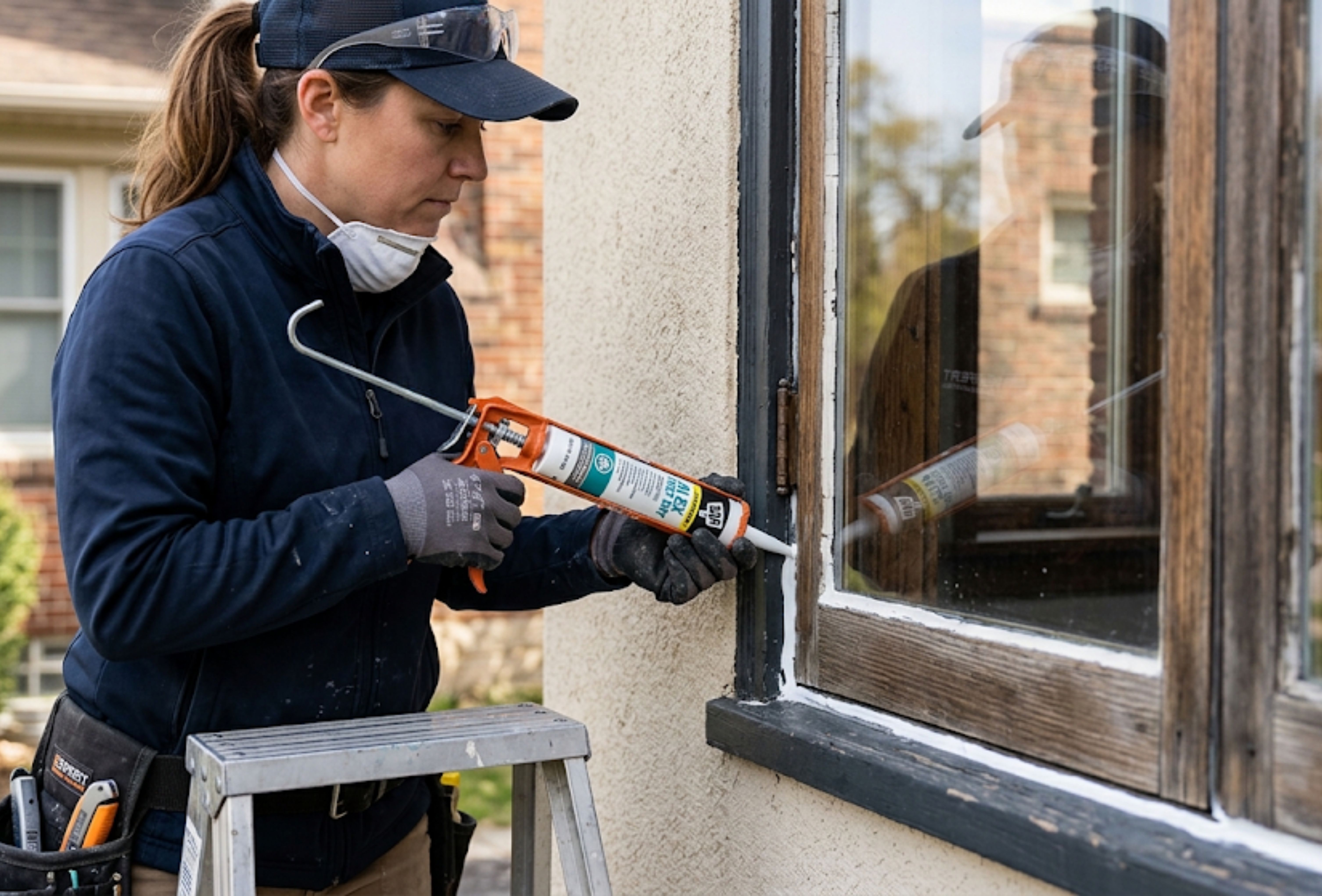
Installation-edge gaps can reduce the performance of energy efficient windows when outside air bypasses the sealed sash. Small openings around the frame can undermine comfort even when glazing and insulation features still perform well.
Material condition matters because cracked caulk or flattened weatherstripping may stop forming a dependable barrier. Replacing worn seals can improve comfort without assuming the entire window needs replacement.
Check Sashes, Frames, and Perimeters Before Cold Weather
Drafts near frame edges, cracked caulk, worn weatherstripping, or sticking sashes can reveal developing air-leak problems. Even energy efficient windows may perform poorly when gaps allow outdoor air around the window assembly.
Check whether each sash closes firmly and whether perimeter seals remain intact without visible cracking or separation. Finding those weaknesses before winter gives you time to address simple sealing needs before colder conditions arrive.
Energy Efficient Windows Depend on More Than Glass
Glass plays an important role in winter performance, but the surrounding window components matter just as much. Frame construction, sash fit, glazing features, and installation quality all influence how well the opening limits heat transfer. Low-emissivity coatings can also reduce heat movement through the glass while allowing useful daylight into the room.
Energy efficient windows perform best when those features work together without gaps, damaged seals, or poorly fitted components. Insulated glass units may also contain gas between panes to help reduce heat transfer through the window. Professional installation completes the system by helping the frame, sash, and glass maintain their intended performance.
Know When Energy Efficient Windows Need More Than Air Sealing
Air sealing cannot correct every window problem, especially when damaged components affect the unit itself. Condensation between panes, warped frames, failed seals, or persistent drafts may point toward deeper performance issues. Windows that remain difficult to open or close can also signal problems beyond weatherstripping or caulk.

Intact glass units, stable frames, and properly fitted components all influence how energy efficient windows limit heat transfer. Persistent drafts after sealing warrant a closer look at the glass unit, frame condition, and installation perimeter. Replacement may deserve consideration when several performance problems continue despite reasonable sealing and maintenance efforts.
Keep Winter Comfort From Escaping Through Your Windows
Winter comfort depends on more than indoor temperature when drafts continue around poorly sealed or aging windows. Addressing air leaks early can improve comfort while helping energy efficient windows perform closer to their intended level. A complete window check can show whether sealing or component repair addresses the source without premature replacement.
Before colder weather settles in, Moss Home Improvement can evaluate window condition, sealing, and overall performance. The assessment should clarify whether simple corrections, component repairs, or replacement best address the underlying performance problem. Have the team check your windows before winter drafts become a recurring source of heat loss.