

7 Signs Your Commercial Roof Needs Maintenance After Winter
Winter is hard on commercial roofs, and the damage it leaves behind rarely announces itself loudly. A proactive commercial roof maintenance check after the cold season helps you catch small problems before spring storms turn them into expensive emergencies. Flat roofs, drainage systems, and membrane surfaces take the hardest hits and deserve a close look every year.
Most property owners and managers don't realize their roof has an issue until water shows up inside the building. At that point, the damage has already spread well beyond where it started. Getting ahead of winter wear puts you in control of the repair timeline and the budget.
What Are the Signs a Commercial Roof Needs Maintenance?
A commercial roof needs maintenance when you notice standing water, membrane bubbling or separation, clogged drains, cracked flashing, interior water stains, visible punctures, or sagging areas on the roof surface. Each of these warning signs points to a vulnerability that worsens under spring rain and wind. Addressing them early prevents minor wear from becoming a full roof-replacement conversation.
1. Standing Water That Won't Drain After a Storm
Flat, low-slope commercial roofs need clear drains and proper slope to shed water after rain. When either fails, water pools in low spots and sits for days under your membrane. Winter debris and freeze-thaw shifting are the most common reasons drainage breaks down before spring.
Ponding water shortens a roof's service life faster than almost any other condition on a flat surface. Left alone through storm season, it works through seams and into the deck below. A commercial roof maintenance check in early spring catches drainage failures before heavy rain makes them structural.
Getting drains cleared and low spots corrected costs far less than repairing damage from prolonged ponding. Addressing drainage now keeps a manageable problem from becoming a costly one.
Standing water adds a weight load that your roof structure wasn't designed to carry long-term. Getting ahead of it before storm season arrives is always the smarter call.
2. Bubbling or Blistering on the Roof Membrane
Blisters and bubbles on a flat roof membrane mean moisture or air is trapped between roofing layers. Winter temperature swings stress the membrane repeatedly and create visible separations across the surface. Catching this early gives you a targeted repair instead of a full membrane replacement.
Once the surface blisters, its ability to shed water and resist puncture drops fast. Rain finds the path of least resistance straight into your roof assembly.
Membrane deterioration spreads laterally and moves well beyond the original problem area. Every storm that passes over a blistered surface pushes the damage further along.
A post-winter inspection identifies every compromised section before spring rain arrives. Addressing membrane damage now keeps the repair scope small and costs predictable. Waiting through another storm season rarely ends with a smaller repair bill.
3. Cracked or Separated Flashing Around Vents and Edges
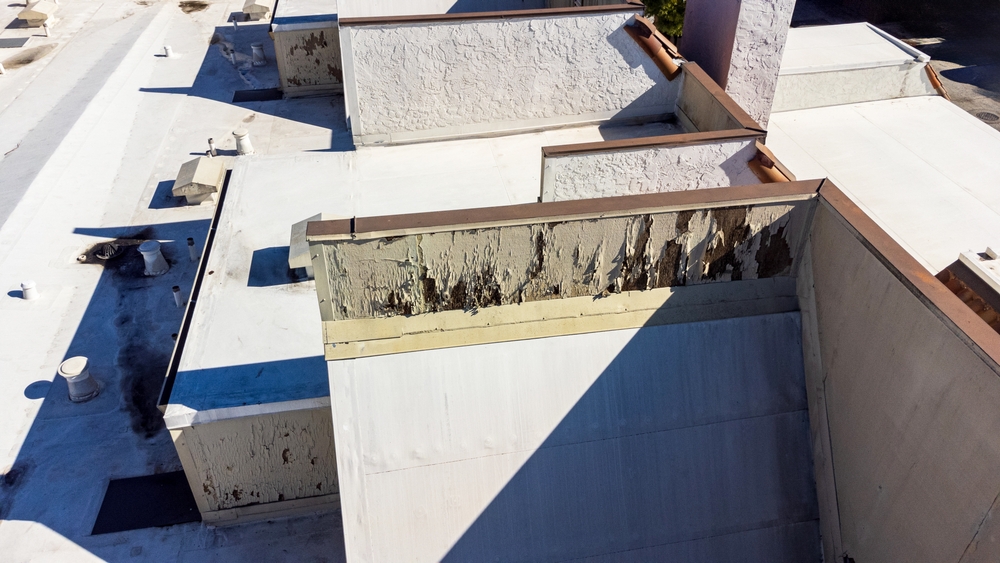
Flashing seals the joints where your roof meets walls, vents, HVAC curbs, and perimeter edges. Winter expansion and contraction pull those seals loose, leaving gaps that direct water into your building. Cracked or lifted flashing is one of the most common entry points for water damage after winter.
Small flashing separations look minor but funnel large volumes of water during a hard rain. Commercial roof maintenance that includes a full flashing check and mapping of every vulnerable joint. A professional catches separation around mechanical equipment that a casual walkthrough misses entirely.
Deteriorated sealant breaks down quietly and stops working long before it looks obviously worn. It causes just as many problems as physical flashing separation does.
Perimeter edge flashing takes the hardest beating from wind-driven rain every storm season. Lifted edges allow water to wick beneath the membrane and migrate across the roof deck.
4. Clogged or Damaged Roof Drains and Gutters
Commercial drainage systems move large volumes of water off your roof during a single storm. When drains and gutters are clogged with winter debris, water spreads quickly across the surface. Clogged drainage creates ponding conditions that accelerate every other issue already present on the roof.
Drain covers and strainers fill up through fall and winter and rarely get cleared until spring. What sits in those openings for months doesn't clear on its own.
Gutter hangers and downspout connections weaken under the weight of ice and frozen debris. Sagging and separation become visible in spring once the ice load is finally gone.
Pairing a drainage inspection with your post-winter checkup helps you understand how water moves across your entire building. Blocked flow drives membrane wear, deck damage, and interior leaks faster than most other conditions. Clearing it early is one of the simplest ways to protect your roof long term.
5. Water Stains or Moisture Damage on Interior Ceilings
A water stain on your ceiling means roof damage happened well before you noticed it inside. By the time discoloration appears on ceiling tiles, moisture has already moved through the roof assembly. Acting fast limits how far the damage spreads and how much the repair costs.
Stains rarely appear directly below where water entered the roof above. Moisture travels along the decking and insulation before it drips somewhere visible inside. Commercial roof maintenance becomes urgent the moment any interior water evidence shows up.
A single stained ceiling tile can mean weeks of slow infiltration, working through layers above. The longer it goes unaddressed, the wider the damage spreads.
Scheduling a roof evaluation as soon as staining appears significantly limits the scope of repair. Waiting gives moisture more time to migrate and more material to damage.
6. Visible Punctures or Tears in the Roof Surface
Flat roof membranes take abuse from winter foot traffic, fallen branches, and wind-driven debris. A puncture or tear removes the only barrier between your roof deck and open water. Even a small breach becomes a serious liability when spring storms bring heavy, sustained rainfall.
Punctures aren't always visible without a careful surface walkthrough by a trained eye. An inspector identifies subtle surface changes that signal a hidden breach before interior damage occurs.
EPDM and similar materials can mask tears already separating at the edges beneath the surface. A surface scuff is sometimes a full-thickness puncture, already letting water in.
Catching roof surface damage early means a targeted patch rather than a section replacement. Letting breaches carry through storm season turns a simple fix into a much larger project. A post-winter surface inspection keeps small punctures from becoming a major water intrusion problem.
7. Sagging or Uneven Areas Across the Roof Deck
A flat roof needs a consistent slope to move water toward drains without allowing it to sit. Sagging or uneven areas mean the deck has absorbed moisture and started to weaken beneath the membrane. Deck deterioration moves quickly once it starts and worsens significantly during an active storm season.
Sagging sections usually trace back to standing water that went unaddressed across multiple seasons. Saturated insulation and softened decking add a load your building wasn't designed to carry. Commercial roof maintenance that catches deck issues early keeps repairs from turning into full structural replacements.
A minor surface sag often signals a larger compromised area underneath it. Deck damage found before storm season is far less disruptive to address than what heavy rain uncovers.
Catching sagging areas now keeps the repair within a manageable scope and cost. Adding water weight to a weakened deck section accelerates the timeline toward full replacement.
Don't Wait for a Leak to Tell You Something Is Wrong
Every sign on this list points to the same outcome: a small problem that gets expensive fast when storm season arrives. Catching membrane damage, drainage failures, and flashing gaps before heavy rain hits keeps repairs targeted and costs predictable. Proactive maintenance is always preferable to emergency damage control after a storm.
Your commercial roof protects everything inside your building, and it deserves attention before it starts failing under pressure. A post-winter inspection gives you an honest picture of where things stand and what needs attention before peak storm season. Acting now puts you in control of the timeline, the scope, and the cost of any work that needs to be done.
Contact Moss Home Improvement & Roofing today to schedule your commercial roof inspection and get ahead of storm season before it gets ahead of you.